
Sonography
Ultrasound (sonography) is a radiation-free, painless and risk-free imaging technique that uses high-frequency sound waves to visualise joints, soft tissue and muscles in real time.
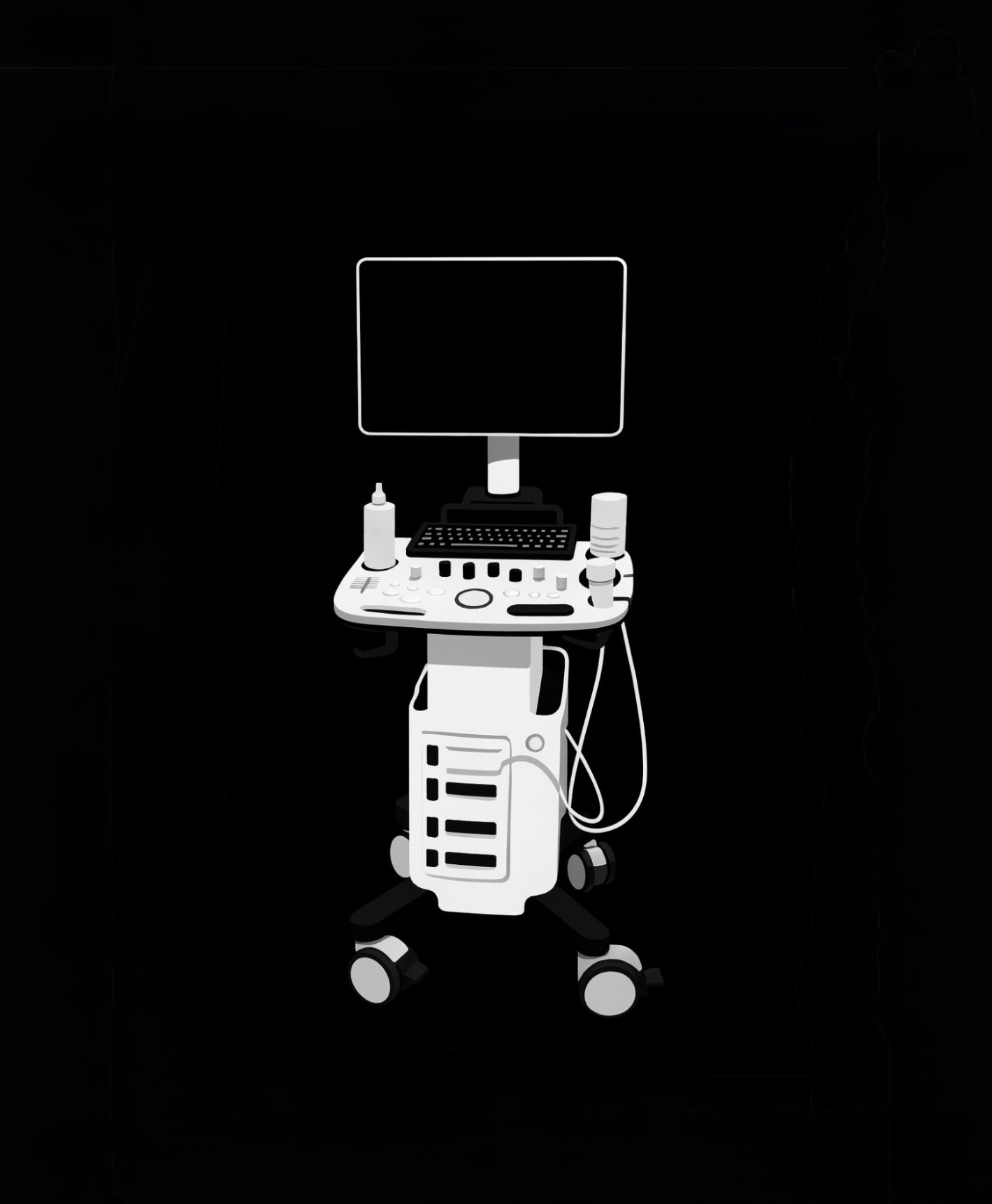
Ultrasound (sonography) is a very important, versatile, and gentle examination method in orthopedics. It is particularly well suited for imaging soft tissues, e.g.:
- Muscles (strains, tears, hematomas)
Tendons (inflammation, partial or complete tears, e.g., Achilles tendon)
Ligaments (e.g., medial collateral ligament of the knee)
Bursae (bursitis)
Joint effusions (fluid in the joint)
Cysts (e.g., Baker’s cyst in the popliteal fossa)
Bones themselves are difficult to see on ultrasound; X-rays or CT scans are better for this.
Dynamic examination
A major advantage is that the physician can examine movements in real time, e.g., tendons during flexion and extension; snapping or rubbing of structures; instabilities under stress.
Ultrasound is often used specifically for treatment:
Ultrasound-guided injections (cortisone, hyaluronic acid).
Punctures of joint effusions or bursae.
Greater accuracy and fewer complications.
Advantages of ultrasound
- No radiation exposure
Quickly available
Painless
Cost-effective
Comparison of both sides possible
Also suitable for pregnant women and children