
Magnetic Resonance Imaging
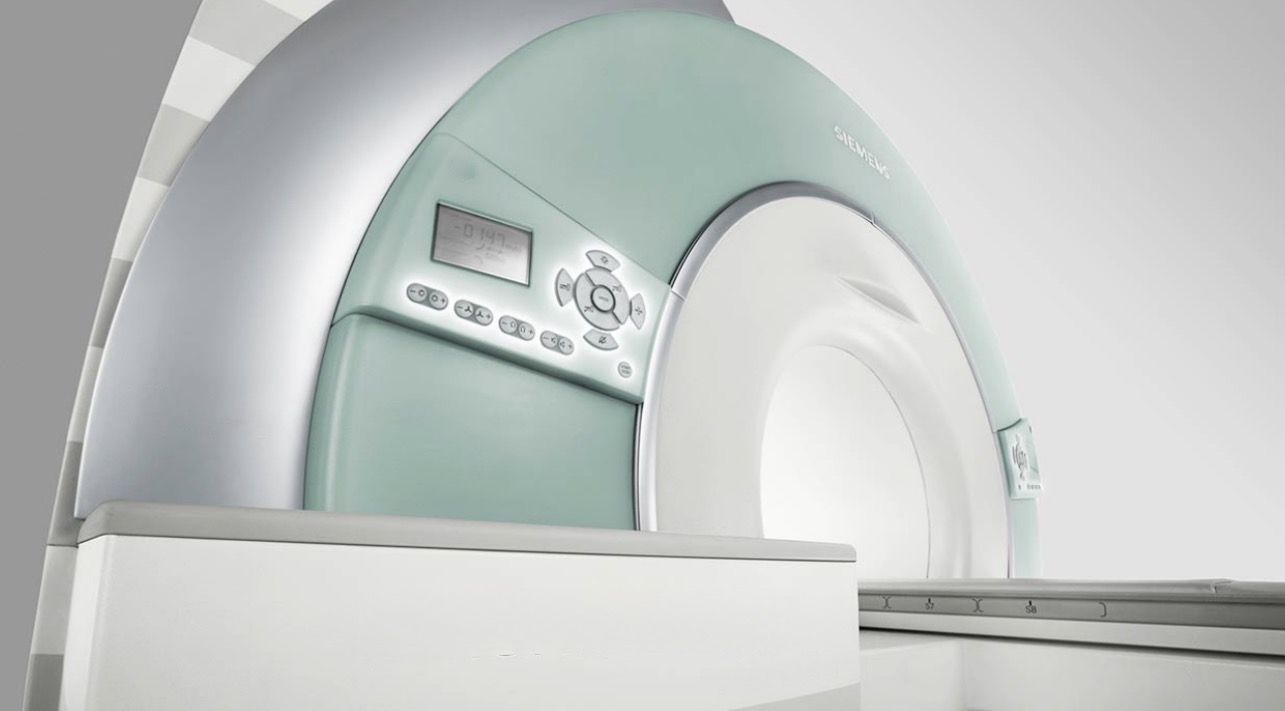
Magnetic resonance imaging (MRI), also known as nuclear magnetic resonance imaging, is a diagnostic procedure that has become widely used in recent years due to its excellent informative value and imaging capabilities. Unlike X-ray procedures and computed tomography, it does not use X-rays. The part of the body to be examined is placed in a strong magnetic field and the tissue is stimulated to emit measurable signals.
These signals are recorded and processed into an image using complex calculations performed by powerful computers. Unlike X-rays, an image of the body is not ‘taken’ but rather ‘calculated,’ so to speak. This is the advantage of this examination method: the section of the body can be ‘sliced’ electronically. This makes it possible to display the inside of the body in high resolution and three dimensions, thus obtaining far more information than with other examination methods. All soft tissue structures such as muscles, tendons, ligaments, menisci, cartilage, fluids and, in particular, the intervertebral discs are excellently displayed.